Taking cutings, Peter Whyte gives some tips

Heat Mat with PlantsAugust is the latest month for taking semi-ripe cuttings.  Fuchsias, Pelargoniums, evergreens, perennial climbers and most deciduous shrubs can still be propagated now, if you use the warmth of a glasshouse or tunnel to boost their growth.

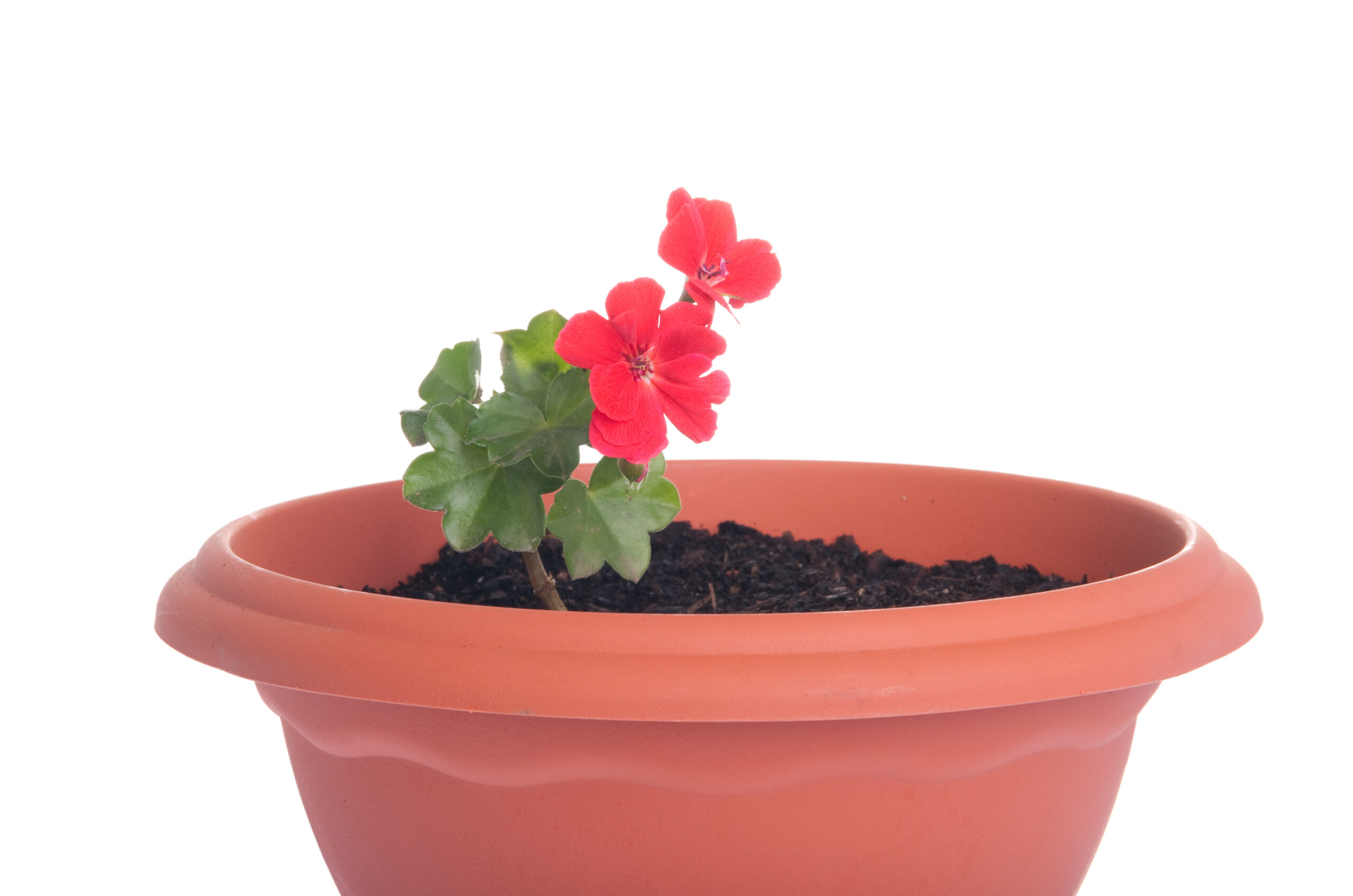
Choose non-flowering shoots or cut the flowers off.  Cut off slips 7-15 cm long by cutting just below a node (the thickening on a stem where a leaf or side shoot grows outwards).  Clematis does better when cut between two nodes.  Alternatively, tear off a side shoot of the right length with a piece of the main stem still attached like a foot, and cut off the ‘toe’ leaving the heel.  Remove any leaves that would end up buried below the surface.  Take plenty of cuttings: some won’t grow and the tighter they are crowded together the better they root.

Fill a container with a mix of two parts peat or leaf mould to one of sand, and water it well.  Dip the bases of the cuttings in hormone rooting powder if you want, and lower them into holes dibbled around the edge with a pencil or similar.  Firm the compost in well to ensure good contact with the cuttings.

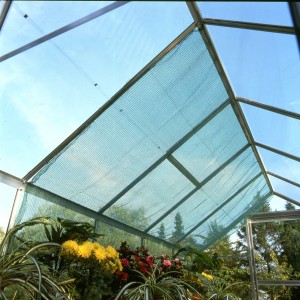
The cuttings will lose water through their leaves and wither unless kept in the shade.  Place them under solid staging, or rig up a shade above them.  Use tinfoil or white plastic instead of black plastic, and keep it up from the plants to prevent heat build-up.

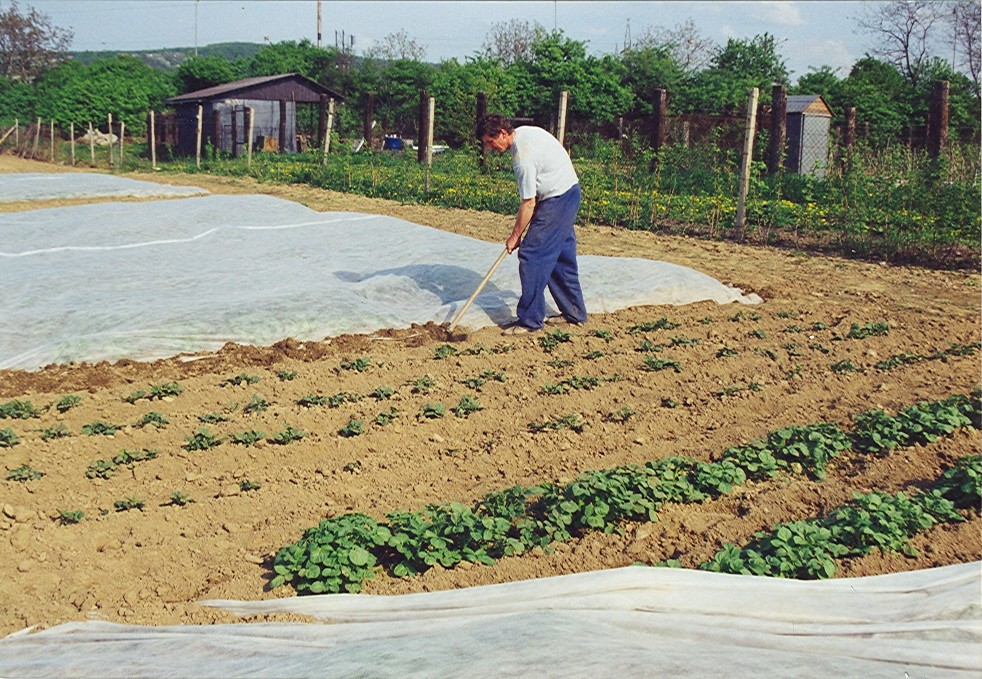
Lay clear plastic over the cuttings to keep in humidity.  Hold it off the plants with hoops of wire or similar.  Pelargoniums and plants with grey, silver, silky or hairy leaves resent humidity and are best left uncovered.  Check the cuttings regularly and remove any dead bits.  They are ready to pot on when they start growing.


Holiday Tips

Holiday tips

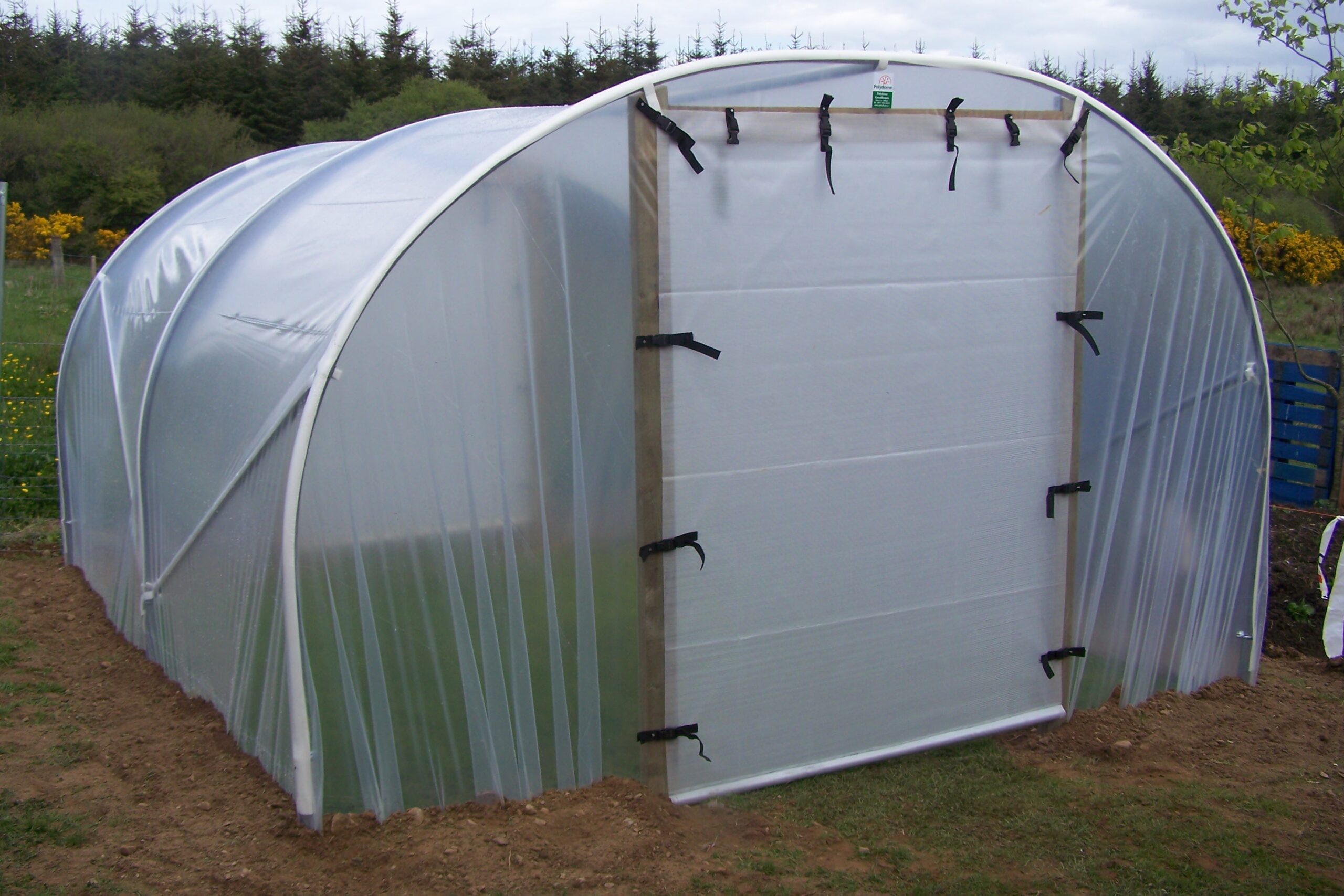
Whether it’s Bali or Ballybunion, everyone wants to go away for a break.  So what happens to your tunnel or your glasshouse while you’re gone?

Automatic watering is ideal.  Be sure to set the controls well in advance so you’re sure it’s working well and regularly, and delivering enough water.  Ventilation is easier; you can leave the vents wide open in mid-summer without fear of night frost but automatic vent openers are less liable to storm damage.  They need no electricity and are easy to fit.  Wedge doors nearly closed or screen them with wire mesh to keep out pets and wildlife.

Bribe a neighbour to keep an eye on it with free produce or a promise of looking after theirs later.  Automatic watering and ventilators are good but nothing beats the human touch: unexpected problems can crop up (pun deliberate) and the comings and goings of neighbours deter thieves. 

Move out pots to a sheltered, shady spot where they can get rain or be watered if needed.  Remove more bottom leaves from your tomato plants than usual: the leaves on the top 70cm of the plants contribute most to their growth.  This reduces their need for water and lets more fresh air around the plants, which helps control fungus diseases.

Remove flowers and developing fruit from plants to reduce the amount of unwanted and over-mature fruit growing while you’re away.  It also further reduces the plants’ need for water.

Tidy up and clear out any weeds; also dead and dying leaves, dropped fruit and other plant remains thaVENTOMATIC UNIT COPYt could host diseases.  Bon voyage!Polytunnel ventilation for blog


Written by horticulturalist Peter Whyte

Growing tips for Tomatoes

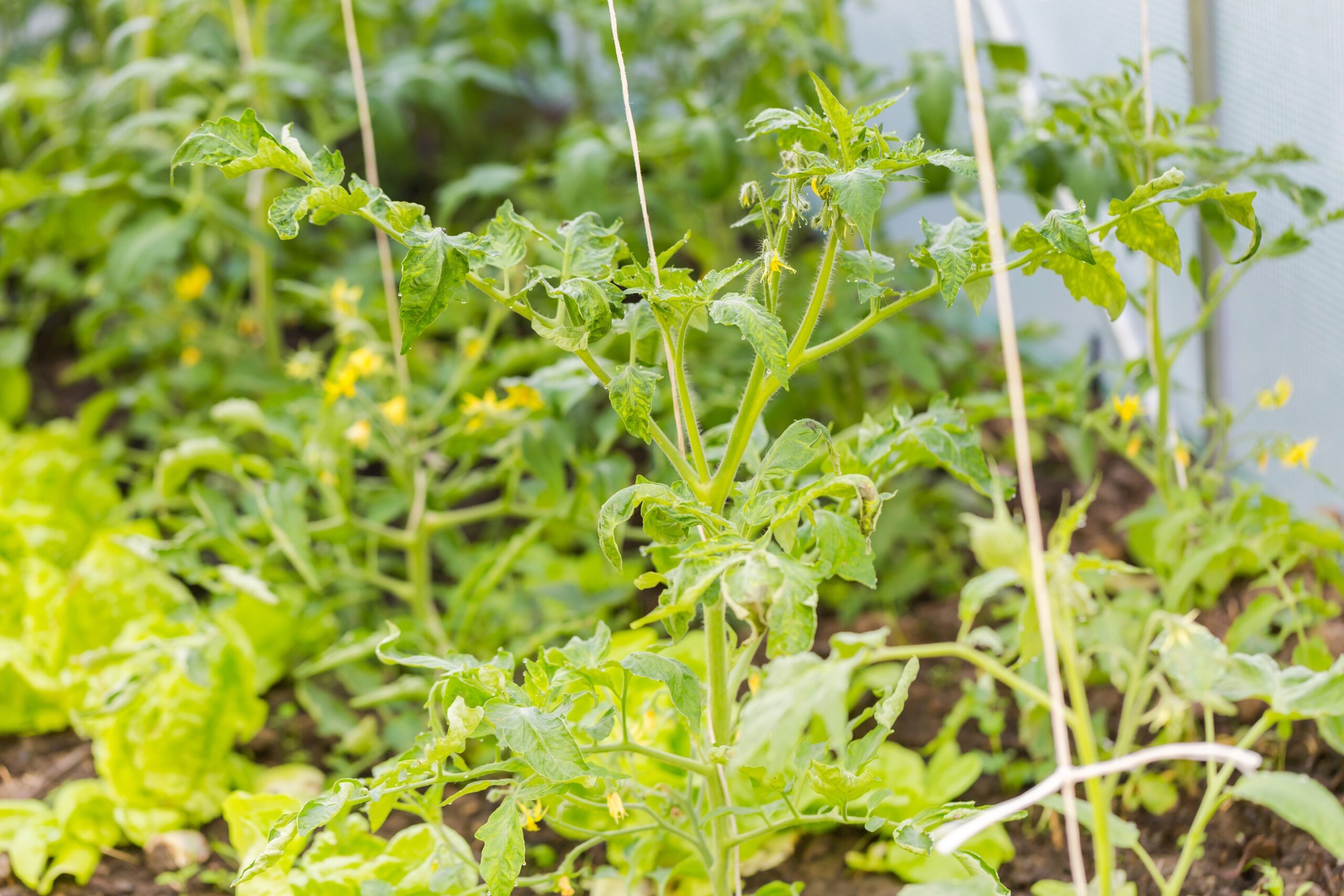
TomatoEveryone with a polytunnel or glasshouse is tempted to grow tomatoes – and why not? They taste so much better when picked just before eating.  Here are a few tips for the best crops.

Choose well-flavoured varieties like Shirley or Alicante.  Some traditional varieties like Moneymaker are insipid.  If you are buying plants, look for healthy ones about 20cm tall.  Yellow leaves indicate poor feeding or cultivation and bluish or purplish leaves indicate chilling: such plants will take time to recover and crop later.  Drawn, leggy plants will be the same.

If planting in the soil try to have the plants in slight hollows rather than on top of mounds, so water will soak in rather than run away.  Water them in well, and let the ground surface dry off between waterings.  Vine tomatoes need support: if using canes put them in before the plants to avoid root damage.  Strings are better than canes for plants in grow-bags.  Cherry tomatoes are wide and bushy plants, so give them plenty of room to spread.  

Feed the plants with high-potash feed as per the instructions, starting when the first fruits appear.  Tie in the growing vines to canes or wind the support strings around them regularly, as stems are hard to train when they thicken up.  Hook very long trusses up on themselves or higher leaf-stems to keep them up from mud and slugs.

Break out sideways any side-shoots growing from the angles between leaf-stems and the main stem.  Snap off upwards any dying bottom leaves to let light and air around the fruit.  Bush tomatoes need no training.  Pick a tomato by thumbing down on the knuckle just above it while twisting the fruit upwards.  The green oil on tomato plants is irritant; wash your hands with soap and water afterwards.

Peter Whyte  B Agr Sc (Hort), Nat Dip Sc (Apic), Dip Tr & Ed, MI Hort

Monty Don at the Polydome stand

UTV’s radio station U105FM broadcast at the Hillsborough Garden Festival from our Greenhouse on Friday.  It was fascinating to see them getting ready – looking for satellites and then to meet Radio and TV presenter Carolyn Stewart who dealt with all the joys of outdoor broadcasting with calmness and panache.  She interviewed BBC TV Gardening Guru Monty Don in our Greenhouse as well as musicians and folk associated with the Show not least of which was Jonathan Pyle, Director of Polydome.Monty Don and Carolyn  Carolyn Stewart and Monty Don are seen here in the photograph.

Polydome’s first day at the Hillsborough Garden Festival

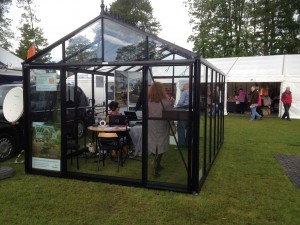
The Hillsborough Garden Festival is starting today. Here is our Greenhouse which is a Janssens Victorian SL. The site was challenging with a 40cm slope across it but despite it being a first time for Director Jonathan Pyle it was completed thanks to a tree surgeon who provided some logs to level it and neighbourly help from fellow exhibitors when an extra pair of hands was needed.

UTV’s Radio Station U105.8 have taken up residence inside our Greenhouse and will be live on air at 12 noon until 3pm and they will be interviewing Monty Don among others.

photo - Copy


This magnificent Rhododendron is the largest in Europe.

Rhododendron at Hillsborough Garden Festival


These Yew Trees have been painstakingly trained and trimmed into barrel shapes.

Yews Trees in Hillsborough Gardens

Garden Festival at Hillsborough Castle

Looking forward to the Airtricity Garden Festival at Hillsborough Castle next weekend (17th, 18th and 19th of May).  We will have a Janssens Victorian SL Greenhouse up and Jonathan Pyle (a Director of Polydome) will be there to meet and greet visitors to our stand.  Monty Don (pictured) will be appearing on Friday 17th.  Hillsborough Castle is a beautiful location for the festival which has been running for some years and is one of the main events in the Gardening Calendar in Ireland.monty-don3  Further information on the Garden Festival can be obtained at the organisers website:  http://www.gardenshowireland.com/


Polydome Googled by Google

Internet giant Google ordered a Greenhouse from us recently.  One member of staff suggested she would like to grow carrotts so they acted and called us.  We visited the site and as it was very exposed to the wind recommended a Janssens Junior Victorian Greenhouse which they ordered and it was promptly delivered.  We suggested they put it up themselves as a team building excersize and as there are good instructions, a dvd as well as our free telephone support the experience should be a pleasant one.


Elegant and strong Greenhouse

Elegant and strong Greenhouse

Watering tips for Greenhouses and Polytunnels

In our wet climate we don’t realise how much water plants use until we get a glasshouse or tunnel, and have to provide all of it ourselves.  What are the options?

Watering-cans are accurate and economical with water but very laborious to use for more than a few plants.  Hosepipes deliver more water but can splash mud and disease spores all over your plants.  Controlling the jet of water with the tip of your finger or thumb is an acquired skill.

Polytunnels often have overhead spray-lines.  They are effective, but spray everything below them whether it needs water or not, and if not hung perfectly level the lowest parts drip for ages after the flow is turned off.

Seep-hose, laid around and between your plants and dripping water from its many holes, is efficient and effective but doesn’t work well with pots.  Keep a watering-can for pots and trays and any additional spot-watering needed.  If water charges are a problem, bury the seep-hose under the soil surface so less water is lost by evaporation. For convenience when you are away, add a battery-powered watering timer to water the plants every few days.  It soon earns its cost in saved water and labour.

Water plants in the morning if you can.  This gives more time forFadrip tube at work wet leaves to dry off before evening, reducing the danger of Botrytis mould and other fungus problems that thrive in damp conditions.  A good soaking is better than little-and-often.

Soil temperature is more important than air temperature for plant growth.  To avoid chilling pot-plants and seedlings with cold water, refill the watering-can when you finish watering: the water will be warmed up to ambient temperature by the time you need it.

Written for Polydome by Peter Whyte B Agr Sc (Hort), Nat Dip Sc (Apic), Dip Tr & Ed, MI Hort

A distinguished visitor

Had a distinguished visitor in last week, the former RTE reporter Mr Charlie Bird. We checked to make sure he didnt mind us blogging about his visit. Charlie is looking at one of our Western Red Cedar ‘Growhouse’ Greenhouses and we had a pleasant chat over a coffee. A pleasure to meet him. We all including Zara had a little laugh because she didnt know who he was (she being from across Irish Sea).Growhouse5

Flying start to the season

A customer visited us last week by plane!  Birr Airfield is next door to us so we got a call to ask if we would meet him and bring him over which we did.  He brought his mother (for her first flight) and no doubt they had a great view of our display of Greenhouses and Polytunnels from above.   Of course nothing beats seeing them up close and getting a feel for size and quality, but it reminds me of the ad for the car where you find any excuse to go for a drive.  Great stuff.

Customer leaving from Birr Airfield

1 8 9 10 11 12 14